Every complex project has its challenges, but some redefine what challenge means. The cleanroom re-classification “Cleanroom Upgrade” project stands as a testament to how strategic execution, relentless problem-solving, and cross-functional teamwork can turn a nearly stalled initiative into a success.
From the outset, the project faced significant hurdles. A revolving door of project managers and initial scheduling challenges meant construction progress was slow, constrained by difficulties coordinating facility shutdowns and securing infrastructure upgrades. For months, minimal traction was gained.
Turning the Tide
Turning the tide required a more creative, adaptive approach. Rather than relying on conventional long shutdowns, the project team began implementing temporary alternate flows, double shifts, and weekend work to piecemeal construction activities wherever possible. By year-end, with approximately 80% of the upgrades completed, a full facility shutdown became unavoidable. In response, the team organized an unprecedented full-site closure. By implementing a staggered return-to-service strategy based on suite criticality, they minimized business disruption while maximizing efficiency.
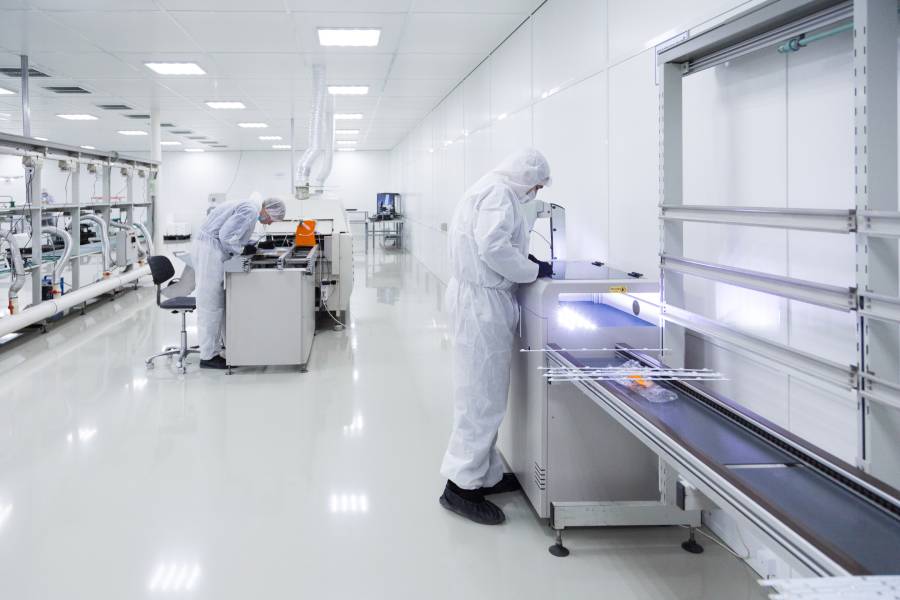
During the shutdown, key milestones were achieved: installation of HEPA filters throughout the corridors, activation of new differential pressure sensors, deployment of environmental monitoring panels and stack lights, wall panel completion, and floor refurbishments. Simultaneously, maintenance teams took advantage of the downtime to perform extensive preventive maintenance activities.
From Shutdown to Qualification
Exiting the shutdown, focus shifted to meeting the regulatory upgrade target. This required an ambitious plan: rebalancing HVAC systems, certifying cleanroom spaces to Grade D standards, executing over 30+ smoke and recovery studies, revising SOPs, updating drawings, and completing critical qualification activities. However, an early analysis revealed the original schedule would overshoot the original deadline by two months.
Faced with this reality, the Syner-G team escalated the issue, secured leadership alignment, and recalibrated the entire schedule by working backward from the fixed due date. Parallel workstreams became the norm. Balancing, vendor certifications, and smoke studies were all launched simultaneously within compressed timelines.
Real-Time Problem Solving
Addressing foundational issues with building pressurization during commercial manufacturing season added another layer of complexity. A day-one halt due to differential pressure reversals led to immediate regrouping and refinement of procedures to protect active production areas. This enabled the team to resume and successfully execute the balance of the work without business impact.
Smoke and recovery studies, spanning 30+ locations, were completed over a single weekend, thanks to rapid scheduler mobilization. Meanwhile, a missing HEPA filter issue in support rooms, originally out of project scope, was identified as a compliance risk. Swift risk assessment and decisive action allowed the installation of these final filters without jeopardizing the June deadline.
SOP revisions, typically straightforward, became a significant obstacle. The Syner-G team had to establish creative solutions to train personnel on future-state procedures while current operations continued, balancing regulatory compliance with operational realities.
Even during a critical external audit, maximum occupancy studies were conducted without schedule slippage, reflecting seamless coordination across manufacturing and support teams.
Zero Margin for Error
Finally, the execution of static testing for EMPQ under near-zero contingency required precise coordination. Grouped qualifications and parallel documentation workflows left no margin for delay. Equipment connectivity issues, environmental monitoring configuration delays, and missed cleaning events threatened to derail progress, but real-time problem-solving, sometimes involving overnight guard shifts to maintain static conditions, kept the project on track.
Your Partner in GMP Excellence
Ultimately, the Cleanroom Upgrade project wasn’t just about infrastructure, it was about resilience, adaptability, and team cohesion. Despite early setbacks and constant operational pressures, the team’s ability to pivot, innovate, and execute under pressure enabled successful delivery against stringent regulatory and operational targets. This project stands as a powerful example of strategic execution turning complexity into completion.
With deep expertise in facility upgrades, GMP compliance, and commissioning and qualification services, Syner-G’s experts specialize in guiding life science organizations through their most complex technical challenges. From proactive risk management to dynamic scheduling and cross-functional leadership, our team partners closely with clients to ensure both operational continuity and regulatory success.
Looking ahead to your next facility upgrade? Connect with our team to explore how Syner-G’s integrated solutions can help your organization meet its goals with efficiency, compliance, and confidence.